James Towner, Chief Growth Officer, ArvatoConnect
James Towner of ArvatoConnect on why fluency isn't understanding, why accountability gets harder as AI starts acting, and why customers should never have to fight the system to reach a person.
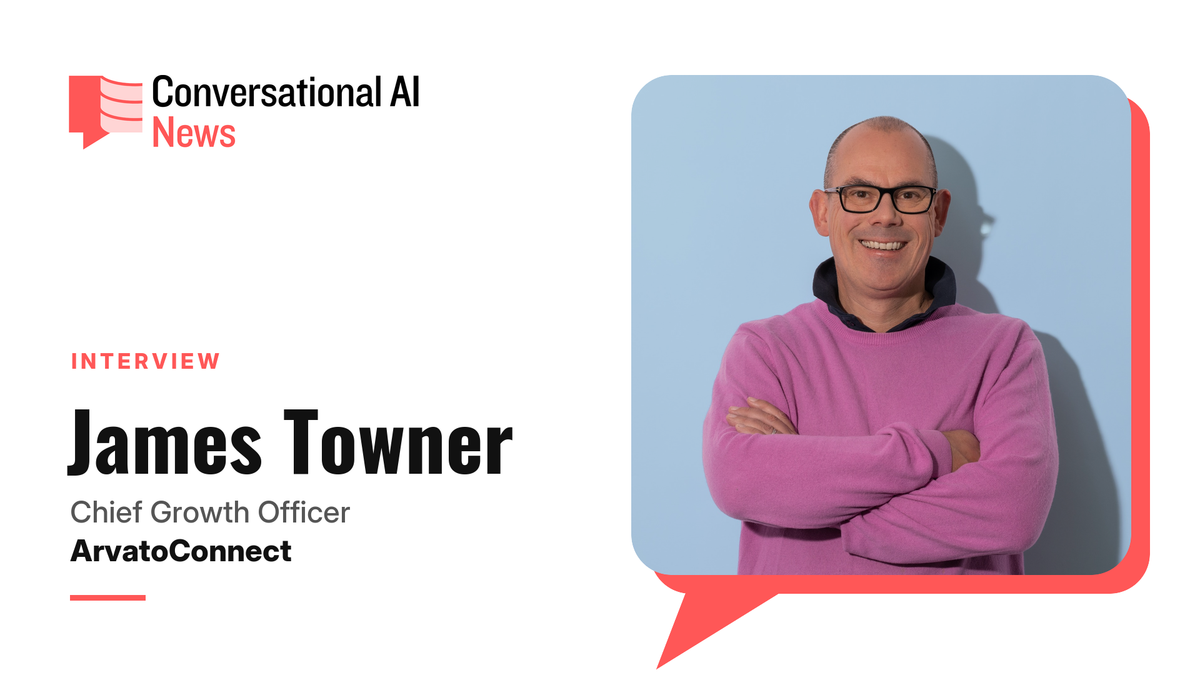
James Towner is Chief Growth Officer at ArvatoConnect, the UK customer experience and business optimisation partner. He started his career as a branch manager at HSBC and went on to run contact centres for organisations including Thames Water and United Utilities, before joining ArvatoConnect in February 2023.
My questions are in bold - over to you James:
Tell us about your career journey. What first drew you to this field and how did your career path evolve?
I’m James Towner, Chief Growth Officer at ArvatoConnect. I started my career as a branch manager at HSBC, where I learnt what good service looks like day to day, not just on paper. I later moved into operational leadership, running contact centres for organisations including Thames Water and United Utilities. That gave me a very practical understanding of how difficult it can be to deliver consistently good service at scale.
I’ve always been interested in what happens when a new idea meets the reality of a busy operation. Large organisations are rarely short of technology or ambition. The harder part is turning those ideas into something that solves a genuine business problem and makes life easier for customers.
That is what brought me to ArvatoConnect as Chief Growth Officer in February 2023. My role brings together my operational experience and my interest in technology and data to help organisations improve customer experience. The attraction was the chance to connect innovation with the realities of service delivery.
What does "conversational AI" mean to you personally, beyond the buzzword?
For me, conversational AI should make dealing with an organisation less of a chore. Most of us know the frustration of navigating a complicated process just to reach the right department or get a straightforward answer. The value is in removing that effort. It should help customers get the right support and make it easier for service teams to provide it. A useful conversational AI tool makes the interaction feel more natural and personal, while helping people understand what to do next.
ArvatoConnect estimates that around 70% of customer queries are routine, structured and well-suited to automation. This presents an opportunity to handle straightforward questions more quickly, freeing up human teams to focus on interactions that need more time and attention.
But speed is not the right answer to every situation. A routine billing query may be resolved in seconds; someone facing serious financial difficulty may need time and a conversation with a person. Conversational AI should always make that support easier to reach, not become another obstacle to it.
What are the biggest challenges you've encountered as a conversational AI practitioner (technical, organisational, cultural, or ethical)?
Accountability is one of the hardest questions, particularly as AI moves from answering questions to acting on them. The challenge is balancing innovation with clear responsibility for what a system does. Giving it more autonomy should not mean making it harder to establish who is accountable when something goes wrong.
For me, the Mills Review brings that question into focus: as we trust AI to carry out more tasks independently, how do we ensure those decisions are handled ethically? Businesses need to be clear about the limits of that autonomy and the safeguards around it, rather than treating governance as something to address after implementation.
I don’t see that as an argument for putting blanket limits on AI. It is about being deliberate about where it is used, what it is trusted to do and how people retain oversight. That is how businesses can innovate without losing control.
What's one common misconception people have about conversational AI, and how do you usually address it?
The biggest misconception is that fluency equals understanding. An AI can give a confident, polished answer without getting to the bottom of why the customer contacted you. Sounding helpful and being helpful are not the same thing.
For example, someone contacting their energy provider about an unexpectedly high bill. Explaining tariffs and payment options might sound useful, but it misses the point if the bill is wrong. The conversation can appear successful while leaving the actual problem untouched, particularly when a customer’s circumstances are more complicated.
That’s why I look beyond conversational ability and ask whether the system is actually solving the customer’s problem. It needs access to the right customer data and records, alongside firm guardrails that refer complex complaints to a person. A plausible answer is not enough.
What's a conversational AI initiative or piece of work you're most proud of, and why?
One example I’d highlight is AskAva, our AI-powered HR assistant. It helps colleagues find answers to policy questions without having to search through multiple documents, and has already supported more than 1,000 conversations. It is a straightforward use of conversational AI, but that is precisely the point: it tackles an everyday frustration rather than trying to demonstrate everything the technology can do.
What makes it meaningful for me is the investment around the tool, not just the tool itself. Through our Digital, Data & AI Academy and practical training, we are helping colleagues build the confidence to use AI responsibly. Confidence in using AI safely and ethically has risen from 60% to 90%. Giving people access is one thing; helping them feel equipped to use it is another.
We are also giving colleagues a way to put forward their own ideas through MyCreationStation. Each idea starts with understanding the problem before deciding whether AI is the right answer. That is the approach I’m proud of: making AI useful in everyday work, with the people using it helping to shape where it goes next.
How do you typically think about measuring success in conversational AI - what signals or outcomes matter most to you?
I want to know whether the customer got the right outcome, not just whether the interaction ended quickly. Customer satisfaction and efficiency matter, but they need to sit alongside compliance and governance. A faster conversation is not an improvement if the customer leaves without the support they needed.
I’d also look closely at the quality of escalation: is the system consistent, does it recognise when a person needs to step in, and are vulnerable customers getting appropriate support? Those are important tests of whether greater autonomy is working in practice. For example, a conversation that starts as a disputed bank transaction may reveal suspected fraud. Recognising that change and handing it to someone who can investigate is a successful outcome, even if the AI does not resolve the case itself.
The numbers should only take part of the story - reviewing what happened in the conversation tells the rest. Together, they should show whether AI is improving service and helping teams work more effectively, rather than simply moving more interactions through the system.
Which emerging trend, capability, or shift in conversational AI are you most excited about right now, and why?
Voice AI is really exciting me. The opportunity is to let customers explain what they need in their own words, rather than having to adapt to a rigid script or a set of menu options.
What excites me is the progress in speech recognition and responses. There is the potential for a more fluid exchange, without the repetitive, scripted answers that have made earlier experiences so frustrating. The important advance is not simply a voice that sounds more human, but a conversation that is easier to have.
There are still real limitations. Accents can be misunderstood, context can be missed and a convincing response can still fail to resolve the issue. That makes implementation critical. Done well, voice AI could handle more straightforward interactions and give human teams more time for complex conversations. Done badly, it is just a more sophisticated way of keeping customers from the help they need.
How do you see conversational AI evolving over the next 3–5 years? What's one meaningful change you expect to see?
I think 3-5 years is too long a timeframe when considering AI. Over the next 12 months, I expect the meaningful shift to be from answering questions to helping customers complete a process. Conversational AI will become more integrated into the customer journey, guiding people through what needs to happen rather than simply explaining it.
That should also change how AI and people work together. Automation is still too often treated as a way to remove people from the process. Yet our research found 35% of vulnerable consumers could only reach a human adviser after significant effort, and a further 15% were unable to reach one at all. That is a clear warning against making access to people harder in the name of progress.
The change I want to see is a customer journey where AI helps people move forward and brings in human expertise when it is needed. Customers should not have to fight the system to get the right kind of help. More capable technology should mean less effort for them.
What advice would you give to someone starting out in conversational AI today?
Start with the point where the customer gets stuck, not the technology you want to use. It is easy to be impressed by what AI can do and lose sight of whether it makes the service easier to use. A sophisticated tool is of little value if customers struggle with it.
Get to grips with the customer journey first. Understand which steps create confusion or frustration, then consider where AI could remove that friction. That gives you a specific problem to solve rather than an open-ended search for somewhere to deploy the technology.
Our research found 36% of senior banking, financial services and insurance leaders identified digital agents that guide customers through forms and signpost next steps as having the greatest potential to support vulnerable customers. This is a good example of how AI can make processes more accessible, rather than simply automating interactions for the sake of it.
And don’t treat launch as the finish line. Test, listen to customers and keep improving. The real test is whether the tool works for the people using it, not how it looks on a demo.
What's one lesson you wish you'd learned earlier in your career working with AI?
The lesson is that technical capability does not automatically make something a good operational decision. Just because AI can do a task does not mean handing it over is the right choice. It is easy to get caught up in the excitement and give too little thought to what happens once the technology is part of everyday service.
My experience in contact centres and customer operations has shown me how easily a supposedly simple process can become complicated. AI is no different. If it answers a complaint incorrectly and the case then needs to be referred to a person, you may have added work and delay rather than removed them.
I would put more emphasis on understanding the whole operation before deciding what to automate. The question is not just whether AI can handle one step, but whether the service works better as a result. That distinction is easy to overlook when the technology itself is so compelling.
Many thanks to James for taking the time to share his insights with Conversational AI News. You can learn more about ArvatoConnect on their website.
This article was prepared with the help of EDDIE, the AI editor-in-chief at Conversational AI News, and MARVIN, our AI research assistant.