Lior Delgo, Co-founder and Chief Product Officer, Globality
Lior Delgo discusses how Glo 2.0's autonomous AI agents are transforming enterprise procurement, negotiating with suppliers and running sourcing events from intake to award.
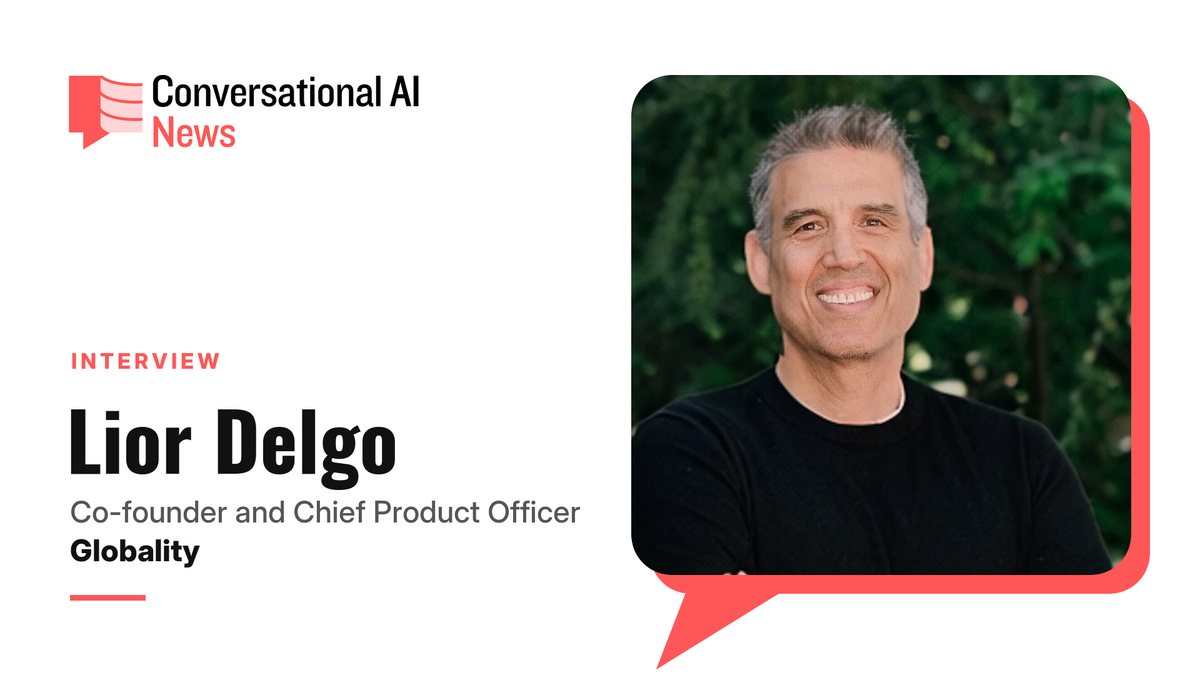
Lior Delgo, Co-founder and Chief Product Officer at Globality, is leading the development of autonomous AI agents that handle enterprise procurement end-to-end. With Glo 2.0, procurement teams can now run sourcing events autonomously - from strategy development through supplier negotiation to final award - addressing the capacity constraints that leave more than half of addressable enterprise spend unsourced.
Globality is a returning company: we first spoke to Chief Product Officer Matt Malden for an AI Innovator Spotlight in February 2025, when Glo helped procurement teams get a sourcing event started.
My questions are in bold - over to you Lior:
Glo helped teams start sourcing events. Glo 2.0 now runs from intake to award. What changed?
The constraint procurement teams face has stayed the same: capacity. More than half of addressable enterprise spend is still not competitively sourced because there are not enough hours to run every event. Helping a team start an event addressed part of that. Running it through to award addresses all of it.
What changed is the technology. AI has crossed a threshold. Previously, software could automate predefined workflows. Now AI can understand objectives, develop strategies, interact with people, make decisions, and execute work. That is the fundamental shift we are building on.
What changed is that Glo now starts from an objective. Before it engages a supplier, Glo builds a sourcing and negotiation strategy covering the requirement, business objective, commercial priorities, and trade-offs, with a should-cost baseline drawn from market intelligence and available data. Depending on the customer's governance model, a sourcing professional reviews that strategy or Glo moves straight into execution.
Glo's agents then reason through spend history and market data, engage suppliers, close gaps in proposals, negotiate, and produce award scenarios: the full intake-to-award process on one platform. We designed trust into Glo from the start, and customers are showing their confidence by putting more of their spend through the platform.
What does autonomous negotiation run by Glo 2.0 look like, and who is on the other side?
It begins with the strategy and should-cost baseline, so Glo knows what matters most for the event, whether that is price, scope, service levels, quality, delivery, risk, or a combination.
On the other side is the supplier's own sales or bid team. Suppliers log into the Glo supplier portal, upload proposals and pricing, and negotiate with Glo in conversation, much as they would with a member of the client's procurement team. Glo runs simultaneous, multi-round negotiations with every supplier, answers questions, resolves ambiguities, and decides the next best action for each one. If a supplier tests its leverage with an unexpected price increase, Glo weighs the market and the alternatives before responding within the client's limits. Capacity constraints make it hard for human teams to focus on every event and supplier, so their time goes mainly to the most strategic. An AI agent has no such constraint, so every event and supplier, from strategic to tail, receives the attention you would want your best sourcing professional to give. For large strategic events, Glo can also take on the manual and technical work of normalizing proposals and checking that each one initially meets your 100+ requirements, so your team can focus on the strategic elements of the negotiation with suppliers.
Suppliers know they are working with AI because Glo identifies itself as an AI agent in the conversation, and a supplier with a concern can escalate to Globality support or the client team. As suppliers adopt their own agents, negotiations become faster and more structured for both sides. Glo negotiates within the strategy and guardrails your team sets, grounded in current market data, and records every exchange for full auditability.
How does Glo earn a CPO's trust to run events autonomously, and how does the team stay accountable for the outcome?
Autonomy and control work together. The purpose of autonomous AI is to let people govern far more work than they could ever execute themselves, with human accountability intact. Trust in autonomous execution has been a core design consideration from the beginning, and four elements matter most.
Explainability. Glo shows what it is doing and the rationale behind each decision, so the team sees the reasoning as well as the outcome. Transparency. Users can enter the Glo space for any supplier and follow the negotiation as it happens. Escalation. If a situation falls outside its authority or guardrails, Glo escalates to the sourcing manager, gets guidance, and continues. Independent supervision. A separate supervisory agent reviews each interaction before it reaches the supplier.
Accountability stays with the procurement team. Glo negotiates on the terms and strategy the team sets and produces award scenarios, and a person on the sourcing team makes the final award decision. Auditing happens throughout: every decision, score, and rationale is documented as the event unfolds, and at close the conclusion tab shows each supplier's final position and the award scenarios derived from them. Every AI action is logged and exportable, so if an award is ever questioned the full negotiation record answers it. Questions of contractual liability are governed by our client agreements.
Together, these safeguards let teams put Glo to work on far more events while they stay in command of the strategy, the guardrails, and the final award.
Where do customers draw the line on autonomy, and what is the biggest misconception about autonomous AI in procurement?
The biggest misconception is that autonomy is all or nothing. It is a spectrum: a workflow tool follows a fixed process, a copilot recommends and waits for a person, and an autonomous agent reasons and acts within limits the team sets.
Customers draw the line differently depending on the sourcing event. A US$120,000 market research engagement with a known supplier pool and a repeatable process can run at a higher level of autonomy than its professional services label suggests. A US$2.4 million a year, multi-year electronics agreement needs a person much closer to the wheel.
A related misconception is that handing over execution means handing over control. Teams set the strategy and guardrails, every decision is documented, and a person makes the final award.
You combine direct, indirect, strategic, and tail spend on one platform. Why does that matter, and how much does Globality's domain expertise shape Glo?
Enterprise purchasing has long been organized around the limitations of software. The distinctions between direct and indirect, strategic and tail largely reflect how procurement systems were designed, with a specialized tool, workflow, and teams built around each. AI removes the need to organize purchasing that way.
An agent should understand what the business needs and determine how to execute, regardless of those classifications. A request for direct material and a request for a marketing service each start with a business need. A business stakeholder simply states what they need, and Glo determines the right sourcing strategy and path, so no one needs to decide which system to use.
Glo can do this because of how it was built. From the first days of Globality, procurement and category experts helped us curate data and encode category knowledge. The foundation models provided by the major labs (OpenAI, Anthropic, etc.) are powerful, but what differentiates an enterprise AI system is the context around the model: proprietary data, domain knowledge, tools, and a history of decisions that can provide guidance for future needs. Combined with our experience helping sophisticated procurement organizations deploy AI at scale, that gives you both the intelligence in the product and the knowledge of how enterprises operate.
Give us real deployments. What did customers hand over to Glo and what measurable results came back?
Fidelity Investments shows what becomes possible when capacity stops being the constraint. A long-time leader in financial services innovation, Fidelity saw an opportunity to handle high transaction volume without adding headcount. It adopted autonomous sourcing to improve supplier rates and cut costs, and in professional services it now sources with little to no involvement from procurement professionals. The results: 20% savings on competitively sourced events, about 50% faster time to contract, an 84% reduction in resources required (eight people instead of 50), and substantial payback in about three months.
HP shows the same shift from a different angle. HP's procurement leadership mapped out years ago how they wanted buying to work: guided, compliant, and consistent for every business stakeholder. Glo now supports HP from RFP creation and scoping through supplier analysis and bid negotiations, and work that used to take weeks now takes hours. HP is also using Autonomous Mode. Steve Dyson, VP of Global Indirect Procurement at HP, says: "We've been impressed by what Globality has delivered for our procurement organization over the years, and the early results from Autonomous Mode are the most exciting yet. We're competitively sourcing spend we simply didn't have the capacity to reach before."
What matters most to me is the value Glo brings to procurement teams. Agents take on the manual sourcing work that used to take weeks or even months, so procurement can bring competition to every event, including the ones it didn't have the capacity to run. The result is tangible cost savings and business value across all spend, and a place for procurement as a strategic part of the organization.
Many thanks to Lior for taking the time to share his insights with Conversational AI News. You can learn more about Globality on their website.
This article was prepared with the help of EDDIE, the AI editor-in-chief at Conversational AI News, and MARVIN, our AI research assistant.