Rob Harvey, Chief Product Officer, Sidetrade
Sidetrade's CPO on what its Aimie agents may do alone when collecting cash for Mistras, how they handle disputes, and how every decision is audited.
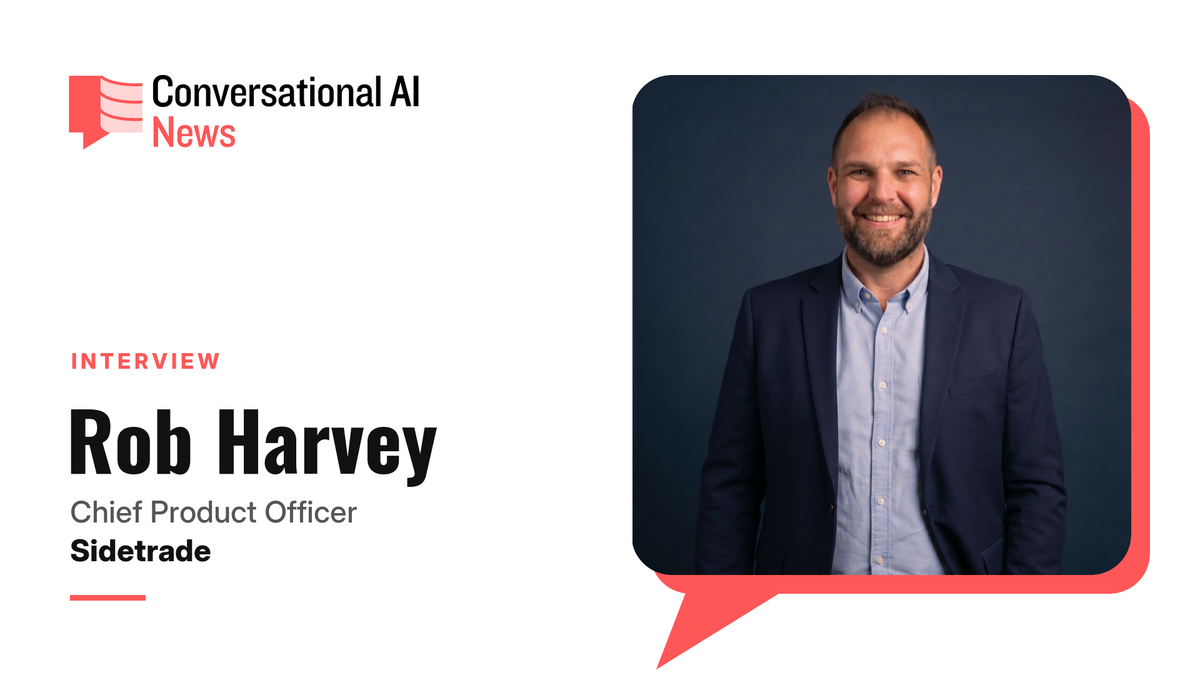
Rob Harvey is Chief Product Officer at Sidetrade, an AI-native company dedicated to Order-to-Cash. Mistras Group (NYSE: MG) has selected Sidetrade's Aimie agents to manage cash collection autonomously, contacting its customers, qualifying disputed invoices and prioritising collection actions. Here Rob explains what the agents are allowed to do on their own, how they handle customers and disputes, and how every decision is audited.
My questions are in bold — over to you Rob:
Mistras is handing cash collection to Aimie agents that contact its own customers. What exactly are the agents allowed to do on their own, and what triggers a hand-off to a person?
Aimie Cash Collection Agents are acting within specific guardrails and policies that are defined in collaboration with our clients. Included in these policies are some hard rules that cannot be adapted, such as telling the recipient that they are speaking with an AI working on behalf of a human, that the call is being recorded, and that opt-out is available at any time. The policy also includes business specific rules. In the case of collection calls, this includes specific terms she can and cannot use, which invoice statuses she can use, and how to deal with requests for specific information. The policy also rules out legal threats, negotiating payment terms, and asking for bank or card details over the phone entirely.
Alongside the policy sits a configuration guide completed with the client, which we call the Set Up Book. It defines which customers she can call, what subsequent follow up actions should be made depending on the outcome, and who those actions are for.
Within those limits, Aimie runs the whole call herself. She places it, gets through the switchboard's phone menu, confirms she has the right person, states the invoice and the amount, and asks for a payment date. She then logs the outcome, a summary, and the full transcript on the account.
Escalations are triggered when policies are broken. These are fixed, deterministic rules written by the finance team, so the model has no say in them. A dispute, a request to speak to a person, a document she cannot provide, or an action outside her permissions each creates a task on a named collector's to-do list.
In every agent deployment, we run automated evals, to confirm the policy is followed to a high degree of accuracy. Each cycle consists of 40+ recuring tests per rule and scenario. The agent then passes to human collectors for testing in a sandboxed environment before it speaks with any external client. This is how we ensure that autonomy is earned only when results justify it.
These are autonomous calls to a paying customer about money they owe. How do the agents handle a customer who is angry, confused or disputing an invoice? Is the customer told they are speaking to an AI?
Yes, at the start of every call. Aimie gives her name, says she is an artificial intelligence calling on behalf of the company, and says the call is recorded. She never presents herself as human. Each client company and its lawyers approve that opening before go-live.
With an upset customer, Aimie stays calm, keeps her sentences short, and works out what is blocking payment. When an invoice is disputed, she neither argues nor rules on it. She records the reason, asks for any evidence needed, marks the invoice as disputed, and passes it to a person.
Hang-ups are logged too, because each one tells the finance team something. Either the customer needs to hear about the new process, or the contact wants to opt out, and opt-outs are respected. That is why we recommend writing to customers before the first call. Nobody likes a surprise call about an unpaid invoice!
You describe this as the move from AI that advises to AI that executes. How much authority can a CFO realistically delegate today, and which decisions should never leave human hands?
Today, a CFO can delegate the execution of a written policy: who to call, when, what to say, and how to record the result. By volume, that is most collections work, and it is also where human teams are least consistent and resources are scarce. Sometimes, it simply isn’t economical to have human collector chase low value invoices, or there may be gaps in spoken language within the team. This is where Aimie drives the most value for our clients.
How much authority to delegate to Aimie is broadly up to each client, based on their requirements and the policy they define. Typically, humans retain anything that requires human level oversight or decision making. That might cover agreeing to a credit note, a write-off, or a payment plan outside policy to discussing how a dispute may be resolved or what to do if a client is in financial difficulty.
SAFE, the Sidetrade Agentic Framework for Enterprise, enforces this by defining for each agent what it does alone, when a person must step in and who receives the escalation along with harnessing the agent with policy, knowledge, skills and execution posture.
How is every agent decision audited? If an auditor or a customer asks why an account was chased, or a dispute was settled a certain way, what can the finance team show them?
Every action is logged from start to finish. For each call, the finance team can show:
- the account and invoice data the agent had
- the version of the rules it followed
- the call transcript
- The call outcome
- Any status changes applied
- Any next action that was triggered.
For escalated cases, the log also shows who received them and what they decided.
Aimie does not settle disputes, which is important for the audit trail. She finds and documents them, but a person decides the outcome, and that decision goes into the same case history. An auditor therefore sees one unbroken record, from the first call to the resolution.
Your data puts US companies at 25 days past due against 18 in Europe. What difference can an agent realistically make to that number, and how soon should a customer like Mistras expect to see it?
Those 25 days are mostly about follow-up, not about customers being unable to pay. We see this across our Data Lake, which covers close to 45 million buying companies. Much of the gap comes from invoices nobody chased, invoices chased too late, and disputes found at day 60.
An agent fixes coverage and timing. It calls every account in scope on the right day, and it surfaces disputes in the first call instead of the third reminder. What it cannot do is fix an invoice that was wrong when it was sent, or make an insolvent customer pay.
How soon depends on what you measure. Payment promises and early dispute detection move within weeks, because we track them call by call. Days Sales Outstanding (DSO) is measured against sales over a trailing period, and improvements mainly affect new invoices as they age, so the full effect usually shows over one or two quarters.
Sidetrade has signed enterprises such as Accor, Sodexo and Securitas on this model. What have those early deployments taught you that the marketing didn't predict?
Accor, Sodexo and Securitas run very different businesses, and the same two lessons came out of all three. The first is that the hardest part is organizational. Getting a company to write down the collections rules that usually live in its collectors' heads takes longer than anything we do with the model. It often takes several iterations of the agent to reach a level where business leaders are confident to let it deal autonomously with a collection call in the real world.
The second is that switchboards matter more than scripts. Many business calls land on an automated phone menu, so we rebuilt Aimie to get through it herself and ask for accounts payable. A call that dies at the switchboard collects nothing.
Sidetrade runs its own data centres, GPUs and fine-tuned open-weight models rather than paying for third-party inference. For a buyer, what does that change in practice: cost, data control, or both? And is it a lasting advantage or just a phase?
Both, and data control comes first. Client prompts, documents and customer records stay in our private cloud and are not sent to a hyperscaler or an AI lab. We run open-weight models adapted for Order-to-Cash (O2C), plus our own prediction models, on NVIDIA GPUs we own in our data centers in Europe and North America. For an agent working on receivables, data location is the first thing a security chief ask about.
Cost comes second, and it matters more for agents than for chatbots. Agents reason, use tools, check the results and reason again, so they consume far more computing per task. If your vendor rents its computing, someone else's price list sets your costs. That is why we sell agents on subscription with a fixed volume of tasks and guarantee computing prices on multi-year contracts, so a CFO can calculate the return before signing.
As for what lasts, anyone with capital can buy GPUs. The durable advantage is the data and the intelligence it creates: nearly $10 trillion in B2B transactions across close to 45 million buying companies, collected since 2015 in our Data Lake. Owning the whole setup means we can use that data without handing it to anyone else.
What happens to the collections team once agents do the chasing? Are these roles being cut, or changed into something else?
Their work changes, mostly toward what they already wanted to do. Depending on the enterprise vertical or industry, Collectors can have portfolios of anywhere up to 1000 accounts and typically spend much of the day on high-value calls to ensure those big bills are paid to terms. That makes sense but often results in the ‘long-tail’ of accounts not getting a touch, other than an automated email until it’s 60 days old.
Agents like Aimie Cash Collection change the game when it comes to coverage. Imagine knowing the payment status of every invoice across your AR ledger? Aimie calling your clients also enables dynamic sequencing of follow-up actions based on outcomes. She hits a voicemail or gets a hang up and instantly follows up with a personalized email.
Once agents handle the volume, humans can focus on where the value work happens, whether that’s accelerating dispute resolution, agreeing payment plans, managing key accounts or taking credit decisions. They also supervise the agents, reviewing calls, adjusting the rules and deciding when to extend autonomy. That job did not exist 12 months ago.
Headcount is each client's decision, and I won't pretend it never changes. Often, though, the agent's first job is covering accounts nobody was chasing at all.
Many thanks to Rob for taking the time to share his insights with Conversational AI News. You can learn more about Sidetrade on their website.