Gen Z Is Replacing Google With ChatGPT, and Brands Should Be Paying Attention
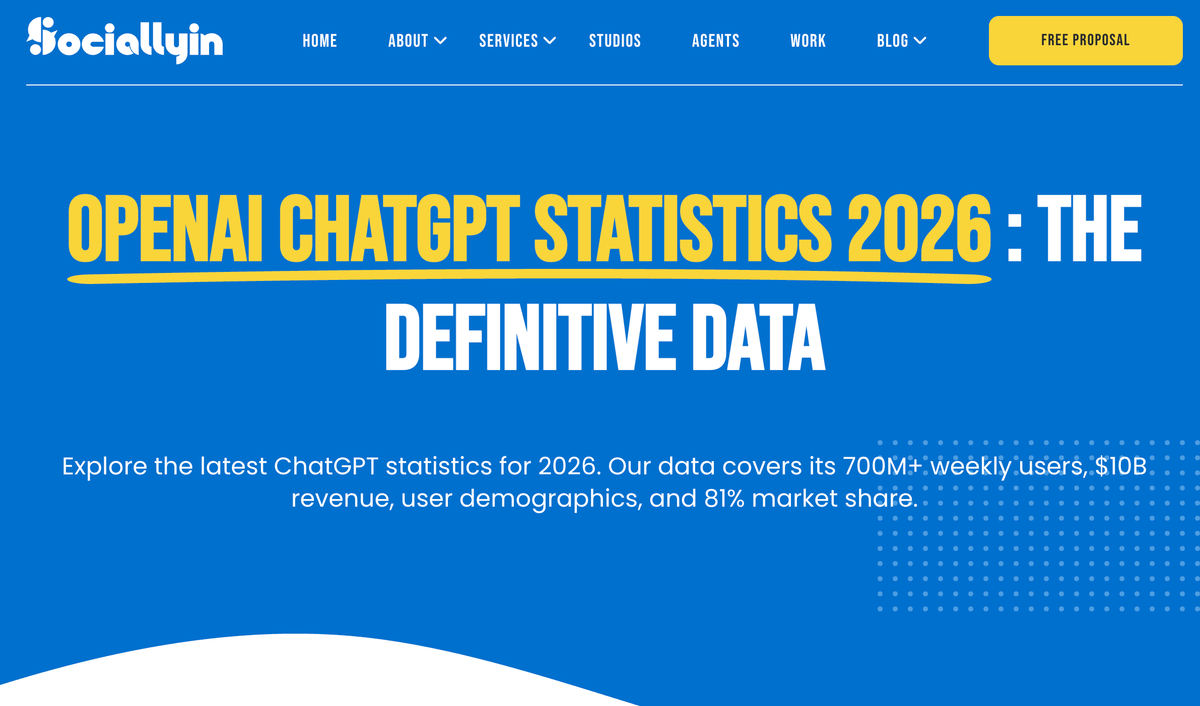
A new report from social marketing agency Sociallyin argues that the generational gap in ChatGPT adoption is now wide enough to reshape how brands think about discovery, customer service, and content strategy. According to the agency's latest analysis of ChatGPT statistics, Americans aged 18 to 29 are 7.2 times more likely to use ChatGPT than adults aged 65 and older, and adults aged 18 to 34 now account for more than half of the assistant's global user base.
For Sociallyin, that is not a technology footnote. It is a signal that the way younger consumers find information, compare options, and form opinions is moving away from traditional search results and toward conversational AI tools.
From Search to Conversation
Younger users are using ChatGPT to draft emails, polish resumes, summarise study material, plan trips, write captions, compare products, and explain complicated topics in plain language. For many in this group, the assistant has become a normal first stop before opening a browser, scrolling a feed, or contacting customer support.
Older adults, by contrast, continue to lean on search engines, direct site visits, customer service phone lines, and recommendations from people they know. The result is a split discovery layer where two generations are increasingly looking at the world through different interfaces.
Keith Kakadia, chief executive of Sociallyin, said the divide should be read as a strategic warning rather than a curiosity.
"The real advantage is knowing how to ask better questions, check the answers, and use the output without letting it replace your judgment. Younger users are building that muscle earlier. For everyone else, the risk is not being left behind by AI itself, but being left behind by people who know how to use it better."
Why Younger Users Are Pulling Ahead
Sociallyin identifies several reasons younger adults are adopting ChatGPT faster. Conversational answers fit naturally into a generation that grew up with search, social feeds, and recommendation engines. The tool quietly absorbs the everyday tasks that used to require multiple tabs and several minutes of effort. Students and early-career workers under pressure to produce more in less time find that AI reduces friction in writing, research, and planning.
There is also a cultural willingness among younger users to experiment with imperfect tools. Trial and correction is treated as a feature, not a bug, which accelerates fluency and shortens the time between curiosity and habitual use.
The deeper shift, the report argues, is not just that younger people use ChatGPT. It is that they may use it before making choices about products, jobs, content, travel, money, and learning. That gives AI a growing role in shaping what feels credible or worth considering.
What It Means for Brands
If younger audiences increasingly ask AI tools for recommendations, comparisons, and summaries, then a brand's visibility no longer depends only on its position in search rankings, its social-media cadence, or the strength of its paid acquisition funnel. It also depends on whether AI assistants can find, understand, and accurately surface its content.
That puts pressure on companies to publish material that is clear, well-structured, factually solid, and useful enough to be referenced when an AI is asked a question in the company's category. The looser, marketing-led content style that thrives on social platforms tends to translate poorly into AI-driven discovery, where assistants prefer crisp answers backed by verifiable detail.
Kakadia added that the skill set inside organisations is shifting at the same time.
"Using AI well is becoming a skill people need. The people who know how to ask clear questions, check the answers, and use the results wisely will move faster. Younger users are already building that habit. Soon, knowing how to use AI may feel as basic as knowing how to search online."
The Bottom Line
Sociallyin's data points to an emerging two-track digital economy in which younger consumers route more of their information-gathering through conversational AI, while older consumers continue to use the established web. Brands that want to remain visible across both will need a discovery strategy that works in search engines, in social feeds, and inside the answers that AI assistants give to millions of daily questions.
Sociallyin's full ChatGPT statistics report is available at sociallyin.com/open-ai-chat-gpt-statistics/.