The Future of CX: Q&A with Medallia’s Sid Banerjee
Sid Banerjee discusses how Medallia is embedding AI across customer experience platforms, from generative AI insights to agentic integrations and responsible AI governance.
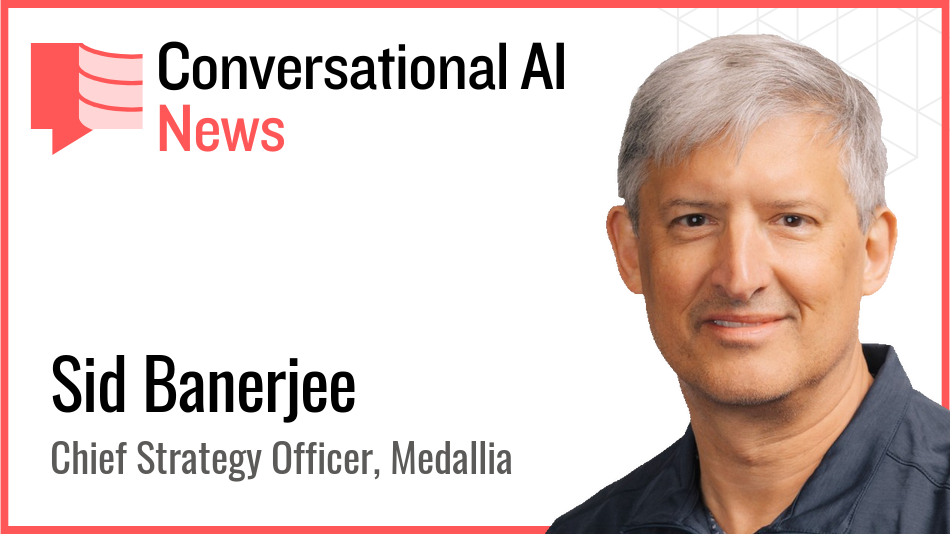
Today we're meeting Sid Banerjee, Chief Strategy Officer at Medallia. The company specialises in customer and employee experience platforms powered by AI.
Over to you Sid - my questions are in bold:
Who are you, and what's your background?
Over a nearly 30-year career, I've built and led a host of organisations that are focused on customer experience (CX), business intelligence, and AI-powered technologies. I previously founded Clarabridge, a customer insight platform, serving as CEO, Chairman, and Chief Strategy Officer, and was previously Chief XM Strategy Officer at Qualtrics.
Earlier in my career I was part of the founding team at MicroStrategy and held roles at Ernst & Young and Sprint. In addition to my position as Medallia's Chief Strategy Officer, I currently serve as Chairman at Prolific. I'm also proud to hold BS and MS degrees in Electrical Engineering from MIT.
What is your job title, and what are your general responsibilities?
As Chief Strategy Officer at Medallia, the global leader in customer and employee experience, my work spans collaborating with our customers and internal teams – including sales, service, product and technology - to shape strategies across product innovation, service and workflow development, and go-to-market planning. My main focus is around aligning Medallia's evolution with the fast-moving CX market.
Can you give us an overview of how you're using AI today?
AI is central to how Medallia delivers insights and drives actions for customers. Long before the large language model (LLM) boom, we embedded ML, NLP, and speech analytics into our cloud platform to extract value from structured and unstructured CX data. With the exciting rise of LLMs, we've integrated generative AI across our platform in several ways. First, we use it to summarise and synthesise signals from surveys, conversations, and digital sessions. Secondly, it supports root cause analysis and delivers prescriptive recommendations to improve customer experiences for global brands. We've developed Smart Response, a tool that enables empathetic, AI-generated replies to close the loop with customers more efficiently. Additionally, we are exploring agentic integrations with partners in the CRM, service cloud, and digital experience ecosystems.
Tell us about your investment in AI. What's your approach?
We adopt a best-of-breed, open approach to AI investment. Our technology stack includes integrations with OpenAI, Amazon Bedrock, Meta's LLaMA, Mistral, and Hugging Face. We either tune these tools or build customised wrappers around them to suit our specific needs. In addition to internal development, we work closely with systems integrators and cloud providers to accelerate deployment and tailor solutions to our customers' needs. Our strategy is to combine building and buying to deliver the most effective AI-powered capabilities.
What prompted you to explore AI solutions? What specific problems were you trying to solve?
AI is fundamentally reshaping how people build products and interact with technology. As a CX company, we saw AI as not just relevant, but necessary. It lets us analyse interactions beyond surveys and understand fragmented customer journeys easier. AI also offers insights that traditional analytics can't easily produce. Ultimately, we see AI as a force multiplier that improves customer understanding, efficiency, and loyalty overall.
Who are the primary users of your AI systems, and what's your measurement of success? Have you encountered any unexpected use cases or benefits?
Three main groups use our AI tools:
- The first group includes CX practitioners working in marketing and research roles who rely on AI to distil insights from large volumes of structured and unstructured data.
- The second group comprises frontline employees, such as contact centre agents and branch staff, who use AI for performance feedback and to help close the loop after customer interactions.
- The third group consists of executives and managers who leverage AI to identify CX trends and understand their impact on business performance.
Across the board, AI empowers all these users to make faster, smarter decisions while reducing manual effort and increasing effectiveness.
What has been your biggest learning or pivot moment in your AI journey?
Like many, we experienced the full Gartner Hype Cycle: initial excitement, disillusionment, and eventual enlightenment. GenAI demos well, but true enterprise value requires governance, data integrity, and alignment to real business outcomes. We learned to package AI around measurable results and embed it sustainably, rather than just rolling out shiny features prematurely.
How do you address ethical considerations and responsible AI use in your organisation?
We focus on three main areas:
- First, we implement strict guardrails around data security and vendor usage to prevent exposure of sensitive information.
- Second, we always verify AI-generated outputs to reduce the risk of hallucinations or misleading conclusions.
- Third, we ensure our AI-assisted interactions comply with brand and service quality standards.
In addition to internal processes, we have convened an AI committee with our customers to foster transparency, share expectations, and stay aligned on responsible AI practices as they evolve.
What skills or capabilities are you currently building in your team to prepare for the next phase of AI development?
We're upskilling our workforce across engineering, sales, and deployment to stay current with AI technologies. We're training staff, evaluating talent gaps, and looking to hire emerging talent. We're particularly excited about the prospect of the next generation of AI natives who can bring with them fresh perspectives and fluency with new tools.
If you had a magic wand, what one thing would you change about current AI technology, regulation or adoption patterns?
If I held a magic wand for the current AI industry, I'd wave it to increase general awareness and understanding. Right now, adoption is slowed by uncertainty and a lack of general knowledge about the technology and its applications. We need broader education so people can feel confident embracing the change. I'd also support regulation targeting genuinely harmful use cases, like deepfakes for example, while encouraging creativity and safe experimentation elsewhere.
What is your advice for other senior leaders evaluating their approach to using and implementing AI? What's one thing you wish you had known before starting your AI journey?
Start by using AI to learn what it can do. Experiment, test, and stay current – this space evolves weekly! I'd recommend following AI application news and explore vendors solving problems in your domain. And don't assume you have to build everything yourself; often, others have already packaged solutions you can use.
What AI tools or platforms do you personally use beyond your professional use cases?
I use lots of tools in my personal life – mainly for creative ideation and research. These include ChatGPT, Google Assistant, and Microsoft Copilot for a variety of tasks.
These tools are particularly helpful when I'm short on time or need assistance finding the right words!
I also find them valuable for generating empathetic responses, similar to how our Smart Response tool helps customer-facing employees communicate thoughtfully and effectively.
What's the most impressive new AI product or service you've seen recently?
Google's Veo, an AI-powered video generation engine, is remarkable. You can prompt it to generate entire videos from imaginative scenarios – it's stunning to see! I think it's going to open a range of new possibilities for virtual experiences.
Finally, let's talk predictions. What trends do you think are going to define the next 12-18 months in the AI technology sector, particularly for your industry?
When it comes to AI, three key trends will shape the CX space over the next 12-18 months.
First, I believe that we will see a return to omnichannel AI. Many AI tools are currently siloed, but there will be renewed focus on delivering insights across the entire customer journey, spanning multiple touchpoints.
Second, AI will move beyond analysis and become increasingly focused on recommending actions and automating responses, especially in service and support contexts.
Finally, I can foresee a rise in direct AI-to-human interactions, particularly in tier-one support and sales. This shift will require far more oversight and comprehensive journey analysis, especially as adoption accelerates in unregulated sectors.
Thank you Sid. Connect with Sid on LinkedIn and read more about Medallia at their website.
You can read more about Medallia on the Conversational AI Marketplace.