Satish Thiagarajan, CEO, Brysa
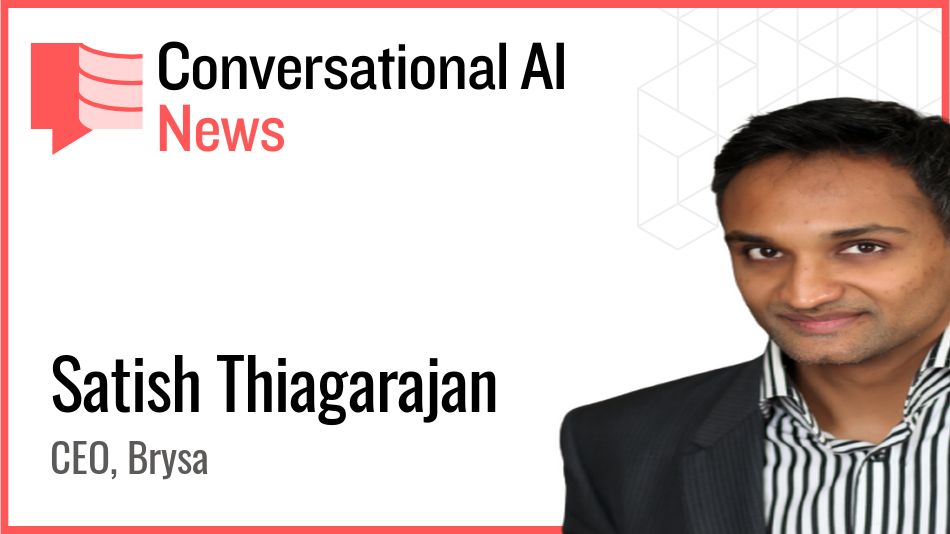
Satish Thiagarajan is the founder and CEO of Brysa, a Salesforce consulting and implementation partner. With a background combining engineering and business, Satish founded Brysa with a clear philosophy: technology should make the lives of clients easier. Here he discusses how Brysa is using AI — particularly Salesforce's Agentforce — to transform consulting and delivery, and shares his honest reflections on what AI can and can't do.
My questions are in bold — over to you Satish:
Who are you, and what's your background?
I come from a background that combines both engineering and business. After completing my engineering degree and an MBA, I was always drawn to the intersection of technology and business. My focus has consistently been on understanding how technology can be used effectively to solve real business problems and make people's lives easier.
That philosophy eventually became the driving force behind Brysa. Our core belief is simple: technology should make the lives of our clients easier. Every solution we design or implement is guided by that principle. We focus on building systems that improve usability, enhance user experience, streamline processes, and introduce meaningful automation so organisations can operate more efficiently.
My experience working with Salesforce implementations also played a significant role in shaping Brysa's approach. I observed that many implementation partners in the Salesforce ecosystem followed a one-size-fits-all model that did not fully consider the unique needs of each organisation. That experience highlighted a clear gap in the market. I believed there was an opportunity to build a consulting and implementation partner that genuinely prioritises people and processes before recommending technology solutions. Brysa was founded with that mindset, focusing on thoughtful, client-centric Salesforce implementations.
What is your job title, and what are your general responsibilities?
I am the CEO of Brysa. My primary responsibility is to set the overall direction and vision for the company and ensure that our decisions consistently move us toward that vision.
At Brysa, our goal is to serve organisations in sectors such as media, engineering, and not-for-profit by helping them get the most value from Salesforce. My role involves guiding the company's strategy so that we can support more clients effectively while maintaining the high-quality, client-focused approach that defines our work.
From an operational perspective, my responsibilities span multiple areas of the business. I oversee sales and marketing, delivery and execution of client projects, and internal functions such as finance and HR. Ultimately, I am accountable for the overall performance and direction of the company.
On a day-to-day basis, this involves working closely with our leadership team, coordinating with different teams across the organisation, and engaging directly with clients. Because Brysa is a lean organisation, I stay closely involved with both strategic decisions and operational execution. I also spend time staying updated on developments in technology, business trends, and the Salesforce ecosystem to ensure that we continue to deliver relevant and forward-looking solutions for our clients.
Can you give us an overview of how you're using AI today?
AI has significantly changed the way we work at Brysa and how we deliver value to our clients. We use AI across multiple functions in the organisation, though the application differs depending on the area of the business.
In account management, AI helps us analyse the history of our relationships with clients. By reviewing past engagements, the types of projects delivered, and the outcomes achieved, we can gain insights that help us provide more meaningful value in future projects. It also helps us identify patterns and opportunities that can benefit other clients in similar ecosystems.
In sales and marketing, we use AI primarily to support research, prospecting, and outreach. Early on, we experimented with using AI tools to generate personalised email content. However, we quickly realised that AI-generated personalisation often felt superficial and lacked a genuine understanding of the prospect's business. Because of that, we shifted our approach. Instead of relying on AI to simulate personalisation, we focus on creating educational content that helps people understand changes happening in Salesforce, AI, and business processes. This allows us to build conversations with prospects rather than simply sell to them.
On the consulting and delivery side, AI acts more as a supporting tool. Our work is still heavily driven by human expertise and experience within the Salesforce ecosystem. We use AI as a kind of co-pilot to validate ideas, explore different approaches, and help our teams think through technical or architectural decisions. However, final decisions always rest with our consultants and developers.
In development specifically, while much of the Salesforce ecosystem is low-code or no-code, AI can still help validate logic, review technical approaches, and assist developers when coding is involved.
Overall, we treat AI as a productivity and thinking tool that complements human expertise rather than replacing it.
Tell us about your investment in AI. What's your approach?
Our investment in AI today is largely centred around how we can better serve our clients within the Salesforce ecosystem. Since Salesforce is pushing strongly into AI through platforms like Agentforce, we have been spending significant time learning, experimenting, and conducting R&D around these capabilities.
Over the past year, we worked closely with the Salesforce team while exploring Agentforce in depth. As early adopters, we pushed the platform to its limits, identifying bugs and gaps and sharing that feedback with Salesforce so they could improve the product. In many ways, we were among the earliest partners actively testing how Agentforce could be used in real business scenarios.
Internally, we have also implemented Agentforce for several use cases. For example, we use it in account management to generate insights from client relationships and past engagements. We also use it to support our SDR function, particularly for lead identification and prospecting activities. In addition, we have built integrations between Agentforce and Slack that allow our teams to interact with CRM data directly within Slack.
Beyond technology investments, a large part of our focus is on investing in our people. We are dedicating time and resources to help our teams understand AI, experiment with it, and learn how it can be applied effectively in consulting and delivery.
Our overall approach to AI is pragmatic. While the technology is evolving rapidly, we do not see it as a magic bullet that instantly solves every problem. Like the adoption of the internet in the past, meaningful AI adoption will take time. Our goal is to learn continuously, evolve with the technology, and apply it thoughtfully where it creates real value.
What prompted you to explore AI solutions? What specific problems were you trying to solve?
In today's environment, it is almost impossible for any organisation to ignore AI. The technology has evolved rapidly, and its potential impact on how businesses operate is significant. Naturally, we wanted to understand how it could be applied in a practical way within our organisation and the work we do for clients.
AI can feel like opening a cave full of possibilities. In the beginning, you see impressive capabilities such as generating code snippets or producing solutions in seconds, which can be quite exciting. However, once you start working with it more deeply, you realise that it also comes with limitations and challenges. Many tasks may appear to be 70 or 80 per cent complete very quickly, but getting that final 10 per cent right still requires careful thinking and human expertise.
This realisation shaped our approach. Instead of adopting AI simply because of the hype, we wanted to clearly understand where it could genuinely create value. For us, the primary motivation was improving efficiency and productivity within our teams.
One key area was development and deployment. In the technology consulting space, skilled IT talent is always in high demand. We wanted to explore how AI could help our developers and architects work more efficiently, validate their ideas faster, and accelerate certain aspects of the development process.
Another area was consulting. AI can act as a thinking partner, helping teams explore solutions, validate assumptions, and approach complex problems more effectively. By integrating AI thoughtfully into our workflows, we aim to strengthen our capabilities and remain competitive in a fast-evolving technology landscape.
Ultimately, our focus has been on using AI to support our people, enhance productivity, and help us deliver better outcomes for our clients.
Who are the primary users of your AI systems, and what's your measurement of success? Have you encountered any unexpected use cases or benefits?
Within our organisation, AI is used by almost every team on a daily basis. Apart from functions like HR and finance, most employees interact with AI tools frequently as part of their work. Teams across consulting, development, sales, and account management use AI to support research, validate ideas, improve productivity, and assist with various operational tasks.
When it comes to measuring success, we look at business metrics such as revenue per engineer and overall profitability. These indicators help us understand whether AI is improving productivity and allowing our teams to deliver more value. However, it is still relatively early in our AI journey, and we have not yet seen a clear or measurable shift in those numbers.
One reason is that deploying AI effectively often requires strong foundations in areas such as data quality and well-defined processes. When implementing AI solutions for clients, we frequently need to spend time helping them clean up their data or streamline their processes before AI can deliver meaningful results. In addition, the current market environment has significant cost pressures, which also affect how quickly the financial benefits of AI become visible.
As for unexpected benefits, one interesting area has been partnership and relationship management. AI tools have helped us better understand how large organisations operate, particularly when working with partners like Salesforce. For example, AI can provide insights into how large corporate sales structures function, which helps us set more realistic expectations and navigate those relationships more effectively. This has made some of our partner interactions smoother and more informed.
What has been your biggest learning or pivot moment in your AI journey?
One of the biggest learnings in my AI journey was realising that AI can help complete a large portion of a task, but it rarely gets you all the way to the finish line. In many cases, AI can get you to about 70 or 75 per cent of the outcome very quickly, but the remaining portion still requires human clarity, judgment, and effort.
I experienced this firsthand while building an automated marketing program for our own organisation around the Christmas period in 2025. What I initially expected to complete in about five hours ended up taking closer to five days. AI helped accelerate many parts of the process, but it also required constant direction, refinement, and decision-making from my side.
Another important realisation was understanding how AI systems interact with users. Since many models are trained on large amounts of internet data, they often try to keep the conversation going by suggesting additional ideas or directions. While some of those suggestions can be useful, not all of them are necessary or relevant to the goal you are trying to achieve.
That experience reinforced an important principle for me: we need to remain the masters of the technology. AI is an incredibly useful tool, but it still requires clear thinking, discipline, and strong decision-making from the person using it. Without that, it is easy to get distracted by endless possibilities rather than focusing on the outcome you actually want to achieve.
How do you address ethical considerations and responsible AI use in your organisation?
Responsible AI use starts with the mindset we encourage within the team. We emphasise that we must remain the masters of the technology rather than blindly trusting the outputs generated by AI systems. Any response from a large language model must be critically evaluated before it is used in client work.
One of the first questions we ask is whether the AI-generated insight genuinely serves the client's needs. Our responsibility is to ensure that any solution we propose is accurate, useful, and aligned with the client's objectives. AI can assist with ideas or analysis, but the final judgment must always come from experienced professionals.
Another important consideration is intellectual property and data protection. Because we operate in an industry that handles sensitive information, we are very careful about how AI tools are used. Our teams are trained not to share client data, confidential information, or any IP-sensitive material with external AI systems. Maintaining the confidentiality and integrity of client information is a non-negotiable part of our approach.
In practical terms, responsible AI use in our organisation involves three principles: critical evaluation of AI outputs, human accountability for final decisions, and strict protection of client data and intellectual property. By following these principles, we aim to ensure that AI enhances our work while maintaining high ethical standards.
What skills or capabilities are you currently building in your team to prepare for the next phase of AI development?
The most important capabilities we are focusing on are not purely technical skills but cognitive ones. In particular, we emphasise critical thinking, curiosity, and a strong learning mindset.
Our team works across industries such as media, engineering, and not-for-profit, and it is unrealistic for anyone to know everything about these sectors. AI tools can be very helpful in quickly learning about unfamiliar topics or exploring new ideas. I encourage my team to use large language models as learning tools when they encounter something they do not understand.
At the same time, it is important not to accept AI-generated information uncritically. We emphasise validating what the AI produces, discussing ideas with colleagues, and applying real-world experience to confirm whether something is accurate or useful. AI can be powerful, but it still requires human judgment and expertise to interpret the output correctly.
Another capability we focus on is accountability. Even when AI tools are used to assist with tasks such as proposal writing or responding to RFPs, we make it clear that the responsibility for the final output lies with us. We are transparent about when AI has been used to support the work, but every decision, prompt, and final judgment remains human-driven.
Ultimately, we want our team to view AI as a tool that enhances their thinking rather than replacing it. Developing strong analytical skills, maintaining a questioning mindset, and taking ownership of outcomes are the capabilities that will matter most as AI continues to evolve.
If you had a magic wand, what one thing would you change about current AI technology, regulation or adoption patterns?
If I had a magic wand, the one thing I would change is the level of fear and anxiety that people currently have around AI. In many cases, that fear is actually slowing down meaningful adoption.
A lot of people worry about what AI means for their jobs and whether they will remain relevant in the future. Because of this, there is often hesitation when discussing automation or how AI can be applied in day-to-day work. Some studies even suggest that when people are asked which parts of their work could be automated, they tend to understate the possibilities because they are concerned about the implications.
Ideally, we should shift that mindset toward learning and growth. Instead of viewing AI as something that replaces people, organisations should focus on helping individuals understand how to use AI to improve what they already do. When people adopt that mindset and learn how to work alongside AI tools, they are far more likely to remain valuable and adaptable in their roles.
Regulation can also play a role in building that confidence. While regulating AI is not always straightforward, there are certain areas where clear rules can help create trust. For example, requirements to label AI-generated content help maintain transparency and accountability. Measures like these can reassure people that AI is being used responsibly.
Ultimately, the biggest shift needed is cultural. If we can reduce the fear surrounding AI and encourage a mindset of experimentation and continuous learning, adoption will become much more productive and positive for both individuals and organisations.
What is your advice for other senior leaders evaluating their approach to using and implementing AI? What's one thing you wish you had known before starting your AI journey?
Every organisation needs to find its own path when it comes to AI adoption. The context, goals, and challenges are different for every business, so there is rarely a single piece of advice that applies universally. That said, one important principle is to balance speed with caution. It is important to move quickly enough to learn and experiment, but moving too fast without fully understanding the implications can lead to mistakes.
We have already seen examples of companies rushing into AI adoption and overestimating its capabilities. In some cases, organisations have replaced human roles with AI too quickly, only to realise later that the technology was not ready to handle those responsibilities effectively. A more measured approach tends to produce better long-term outcomes.
If there is one thing I wish I had known earlier, it is that AI should be viewed as another step in the ongoing evolution of technology rather than a sudden revolution that changes everything overnight. Over the years, businesses have adapted to many transformative technologies such as the internet, email, mobile devices, and instant messaging. AI is part of that same continuum.
Once you begin working with it, the adoption often feels more gradual and practical than the hype might suggest. It becomes another tool that helps teams do their work more efficiently, rather than a magic solution that replaces everything. Looking back, approaching AI with a bit more perspective and less excitement about immediate transformation would probably have been the healthier mindset. The real value comes from steady experimentation, thoughtful implementation, and learning over time.
What AI tools or platforms do you personally use beyond your professional use cases?
In practice, the line between personal and professional AI use is often blurred. Many of the tools I use serve both purposes depending on the situation.
Tools like AI note-takers and transcription platforms are part of my daily workflow, helping capture meeting discussions and organise information efficiently. I also frequently use ChatGPT, which I find to be an excellent all-round tool. Its analytical capabilities are particularly strong, and it has a broad knowledge base that makes it useful for everything from professional problem-solving to everyday questions.
I also use other models depending on the task. For example, Gemini tends to perform well when it comes to marketing-related work, such as writing marketing plans or copy. Anthropic's models are often very effective for coding-related tasks and technical assistance.
Beyond professional work, AI tools have also become useful in everyday life. Sometimes it's as simple as asking for advice on practical issues at home. For example, when I had a plumbing issue, I used ChatGPT to understand possible causes and solutions before taking the next steps. Experiences like that highlight how AI is increasingly becoming a general-purpose assistant that can support both work and day-to-day problem-solving.
What's the most impressive new AI product or service you've seen recently?
The most impressive recent AI product I've seen is probably Delphi. A lot of AI tools are good at generating content, but Delphi does something more interesting: it tries to turn a person's accumulated knowledge, voice and point of view into a usable "digital mind" built from their writing, podcasts, videos and other content. What makes that impressive is the commercial angle. It is not just answering random prompts, it is helping experts, founders and creators scale themselves in a way that feels much closer to productising expertise. That feels like a genuinely new category to me: less "AI assistant", more "AI version of a person that can keep showing up everywhere at once".
That said, I think the broader race is just as impressive. ChatGPT stands out because it has become a general-purpose work tool rather than a novelty, spanning writing, analysis, coding and document work. Claude is impressive for pushing further into agent-style behaviour, including computer use, which starts to blur the line between answering and actually doing. Perplexity is probably the clearest example of AI improving search by giving real-time, source-backed answers instead of just a list of links. So if I wanted an interview answer with a sharper point of view, I'd say Delphi is the most interesting because it feels like a new business model, while ChatGPT, Claude and Perplexity are impressive because they are changing how people actually work.
Finally, let's talk predictions. What trends do you think are going to define the next 12-18 months in the AI technology sector, particularly for your industry?
In the consulting and implementation space, AI will likely make our industry busier rather than reduce the demand for services. Many organisations are now eager to implement AI capabilities within their systems, and that is where consulting partners like us come in. Over the next 12 to 18 months, we expect a growing number of businesses to explore solutions such as Salesforce Agentforce and other AI-driven tools, creating more implementation and advisory opportunities.
One important trend will be the growing adoption of AI platforms that work with existing enterprise data. Tools like Agentforce are particularly powerful because they leverage the data organisations already have within their systems, making AI more practical and actionable for day-to-day operations.
Another major trend will be the increased importance of data quality. For AI to work effectively, organisations need clean, well-structured, and reliable data. As a result, services such as data audits, data cleanup, and data rationalisation will become much more important. Without strong data foundations, AI systems can easily produce inaccurate or misleading results.
At the same time, it is important to be cautious with predictions. A year ago, many people predicted that highly specialised, industry-specific AI products would quickly dominate the market. While we are starting to see some examples, such as legal AI platforms, that level of industry specialisation has not fully materialised yet.
Overall, AI will help consulting firms operate more efficiently. We may need fewer consulting hours for certain tasks, but the overall number of projects is likely to increase as more organisations seek to adopt AI. As a result, the demand for skilled consultants who can implement and guide AI initiatives will continue to grow.
Many thanks to Satish Thiagarajan for taking the time to share his insights with Conversational AI News. You can connect with Satish on LinkedIn or learn more about Brysa at brysa.co.uk.