How Denodo Helps Organisations Deliver Trusted, Real-Time Data for AI
Charles Southwood discusses how Denodo is embedding AI into data management platforms, enabling natural language queries and secure enterprise data access without compromising governance.
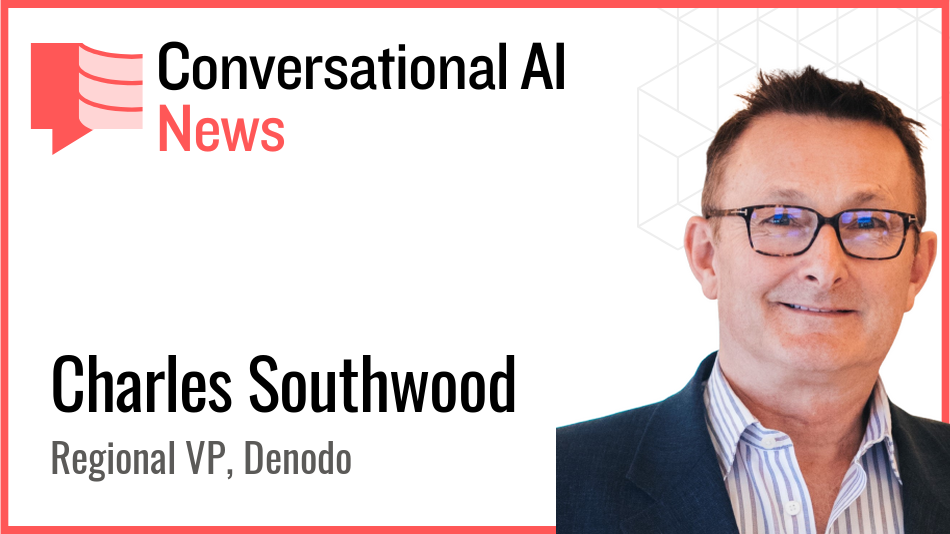
Today we're meeting Charles Southwood, Regional Vice President for Northern Europe and Africa at Denodo.
They specialise in logical data management platforms, enabling organisations to transform data into trustworthy insights and outcomes for all data-related initiatives across the enterprise, including AI and self-service.
Over to you Charles - my questions are in bold:
Who are you, and what's your background?
I come from an engineering background and initially spent some time working in the industry. During that period, I began designing engineering structures using computational fluid dynamics and other emerging technologies. This early exposure naturally led me into the world of IT. For the past nine years, I've been working at Denodo. When I joined, the company had just four people in the region. Since then, we've grown significantly - now with a global team of over 700 employees. Our customer base has expanded as well, and Denodo is now recognised as one of the leading data management organisations in the industry. It's been incredibly rewarding to be part of this journey and to contribute to the company's growth and success.
What is your job title, and what are your general responsibilities?
I am the Regional Vice President at Denodo and am responsible for the company's operations in Northern Europe and Africa. I have a strong background in data integration, big data, IT infrastructure/IT operation and Business Analytics previously gained with companies such as Oracle, BEA systems and BMC software. I am passionate about working in fast moving and innovative markets to support customer success and aligning IT solutions to meet the changing needs of business.
Can you give us an overview of how you're using AI today?
At Denodo, we see two really exciting opportunities when it comes to AI. The first is how we're embedding AI directly into our own solutions. What that means is, we're making our platform smarter - especially in the area of logical data management. So, when users are trying to understand what data they have across the enterprise, our AI capabilities help them get a clear view of everything. It's all about helping them get more value from their data. And one of the really powerful things we've introduced is natural language querying. So now, users can securely query their distributed data from across the enterprise, in real-time, using natural language – no technical expertise needed – and get real-time, context-rich answers that drive decision-making. It's a big step forward in making data more accessible.
The second opportunity is about how Denodo enables other AI systems. We're helping organisations deliver data securely to third-party AI tools. And we know there are concerns around data privacy - especially when it comes to large language models. What makes Denodo unique is that we don't send internal data directly into those models. Instead, we make sure the data gets to the right consumer in a secure and controlled way. So, they get the insights they need, without compromising on security or governance.
Tell us about your investment in AI? What's your approach?
Investing in AI has really opened up some great opportunities for us - especially when it comes to embedding advanced capabilities directly into our platform. What that means for our customers is faster access to data and more accurate insights, which ultimately helps them get more value from their information.
With the Denodo Platform now featuring embedded AI, users no longer need to rely on someone with SQL expertise to get the data they need. Instead, they can interact with the platform through a secure, governed, and fully audited layer - similar to what you'd expect from most large language models. And that investment has been crucial. Even before tools like ChatGPT and Copilot became mainstream, Denodo was already delivering secure, governed, real-time data access. Now, with AI accelerating, we're able to take our platform even further.
Another key point is how we handle data privacy. The Denodo Platform is designed so that the customer data never leaves the organisation's domain – ensuring compliance, data privacy, and governance by design. What we do instead is store metadata - essentially, information about the data - in a vector database, but not the actual data itself. That way, users can benefit from AI without exposing their sensitive corporate information. And that's something we take very seriously. We actually call this QueryRAG.
Who are the primary users of your AI systems, and what's your measurement of success? Have you encountered any unexpected use cases or benefits?
The way we've embedded AI into our solutions really changes who can use them - and the answer is, really anyone in the organisation. One of the biggest breakthroughs has been the ability of large language models to understand natural language. It means business users - who might not have technical backgrounds - can now ask questions about their data that they simply couldn't before.
We're therefore seeing the line between data experts and business users blur. With natural language access, marketing teams, finance analysts and even HR can self-serve critical insights without writing a single line of code.
One of the biggest challenges companies face is the sheer variety and distribution of their data. It's often spread across different systems, formats, and locations. That's where Denodo comes in. Our platform does the heavy lifting by normalising and integrating all that data behind the scenes. So instead of needing a data expert to pull everything together, the platform makes it accessible to everyone. In short, by embedding AI and simplifying access, we've made it possible for anyone in the organisation to become a data user.
What is your advice for other senior leaders evaluating their approach to using and implementing AI?
Gartner released a report last year highlighting some of the biggest challenges organisations face with AI projects. The top three were: resourcing and budgeting, company culture, and a shortage of skills and talent. Recently we're seeing a lot of companies come to us because they recognise that a solution like Denodo - especially with its data virtualisation capabilities - can help address many of these issues.
For example, when it comes to cost and speed, Denodo allows organisations to deliver projects much faster and more efficiently, which naturally helps with budgeting. You don't need to build everything from scratch or move all your data around - our platform does the necessary abstraction of data from sources without the repeated moving and copying.
On the cultural side, we're seeing a real shift. When people across the business realise they can access the data they need without always going through IT, it changes the dynamic. It empowers teams and helps bridge that gap between service levels and actual delivery. I've spoken to businesses where getting a report from IT could take two to three weeks. With AI and Denodo, that kind of turnaround can be significantly reduced, potentially even in real-time.
And then there's the talent shortage. If businesses can make their data products more agile and easier to use, they can do more with the teams they already have. That's where AI really shines. My advice to any organisation facing these challenges is to consider a logical data management approach. It's a smart, scalable way to move forward.
What AI tools or platforms do you personally use beyond your professional use cases?
I've found AI tools like Microsoft Copilot really useful as a starting point, but not necessarily as the final product. For example, I've used AI to draft a recommendation letter. The initial output was quite good, but I treated it more like a first draft. I still went in, refined the language, and tailored it to the specific context and to my voice. For me, AI is a great jump-off point - it helps get things moving quickly - but the human touch is still essential to get it just right.
What's the most impressive new AI product or service you've seen recently?
Recently, I've come across the GenAI-powered data platform implemented by Alexforbes using Denodo's technology. What stood out was how it transformed a traditionally complex financial data environment into something intuitive and accessible. By enabling natural language queries, even non-technical users can now retrieve real-time insights without needing to write SQL.
The use of metadata-driven Retrieval-Augmented Generation (RAG) is particularly innovative - it avoids the need to embed entire datasets, which not only reduces computational costs but also improves data governance and accuracy. The integration with Power BI through a custom AI widget further streamlines decision-making for business users. Through this, Alexforbes was able to manage over a million pension fund members monthly while offering investment solutions more efficiently.
What trends do you think are going to define the next 12-18 months in the AI technology sector, particularly for your industry?
I've seen AI do really well in general business use - it's brought a lot of innovation and efficiency. But at the same time, in some cases, it's actually made things more complicated. One of the big issues is that many organisations have underestimated the true cost and effort involved in building and maintaining AI systems. If you look at the market right now, a large number of companies are still stuck in the pilot phase - they haven't actually gone live with their AI projects.
While I do think we'll see a lot more AI deployments across the industry, we cannot be certain that they will be executed well. There's a real risk in over-relying on AI to automate processes without proper human oversight. That can actually do more harm than good. It's critical that AI systems are thoroughly tested and that humans stay involved throughout the process.
Another key point is data quality. AI is only as good as the data it's trained on or working with. If the data isn't accurate or up to date, the results won't be reliable. That's why it's so important for organisations to use AI in a way that gives them access to real-time, trustworthy data.
Thank you Charles. Connect with Charles on LinkedIn and read more about Denodo at their website.
You can read more about Denodo on the Conversational AI Marketplace.