Apptio’s EMEA Field CTO Greg on Managing AI Spend and Value
Greg Holmes discusses how Apptio helps organisations manage AI investments, the importance of transparency in AI systems, and why smaller teams will punch above their weight in the next 18 months.
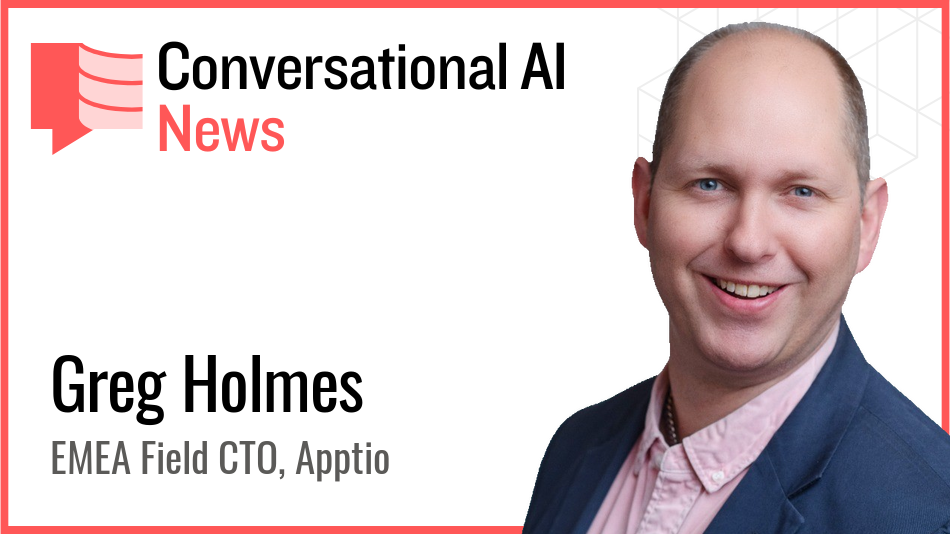
Today we're meeting Greg, EMEA Field CTO at Apptio. They specialise in technology spend and value management software, empowering leaders to make smarter financial and operational decisions. Over to you Greg - my questions are in bold:
Who are you, and what's your background? What is your job title, and what are your general responsibilities?
I'm the EMEA Field CTO at Apptio and I work with clients, prospects and partners to help them better understand their tech investments and link tech consumption to business value. Across industries, companies want to reap the reward of tech like cloud and AI whilst also balancing spend which can be difficult without the proper tools and guidance. I've been in the software industry for over 20 years now and I've seen first-hand how the challenges organisations face in today's digital economy have evolved. I like to think of my role as passing on all those learnings to help IT leaders and businesses make the best possible decisions for meeting their tech goals.
Can you give us an overview of how you're helping businesses adopt AI today?
To maximise the impact of AI, organisations need stronger visibility not only over costs and usage, but also the intended value and ROI. Without this, adoption will stagnate. We're seeing this impact workforces as FinOps teams are increasingly collaborating with IT financial management departments to obtain deeper visibility into investments and minimise the risks of ballooning costs and wasted resources. As part of a broader suite of SaaS offerings for Technology Business Management, we're very focused currently on helping organisations track the entire lifecycle of their AI investments, with features to monitor total expenditure and performance, identify anomalies in spending, and assess detailed cost drivers.
Tell us about your investment in AI? What's your approach?
Since becoming part of IBM, Apptio's investment in AI has only become stronger as we can now leverage IBM's watsonx AI platform across our family of products. This is strengthening our product offering in numerous ways but the bigger focus for Apptio is helping organisations track and manage their AI investments. Specifically at Apptio, we're using AI in order to build better cost models, and to provide insights on this data to users. We do this by taking time to understand the data and quickly categorising it, helping to proactively analyse and provide actionable next steps.
Who are the primary users of your solution, and what's your measurement of success?
On a global level we work with over 1,500 customers, including more than half of the Fortune 100. Our customer-base spans across a range of industries, including banking, public sector and healthcare – everything from helping the Bank of Ireland to improve cost efficiency to supporting Cancer Research UK make more data-driven decisions. For us, measuring success is all about doubling down on the real business benefits that AI delivers. This means looking beyond surface-level metrics and digging into how AI directly impacts cost reduction, efficiency and user satisfaction.
What has been your biggest learning or pivot moment in your AI journey?
One of my biggest learning moments has been realising that the true potential of AI lies not in simply replacing existing services, but in enabling the new. We often hear the word 'replacement' instead of the phrase 'new ability'. AI opens up ways to deal with challenges that were out of reach before.
For instance, AI has allowed us to address key challenges such as managing client requests outside of business hours, a pain point that traditional systems struggle to tackle effectively. By leveraging AI for 24/7 availability and faster responses, we've truly enhanced access to information. This pivot has reframed how we think about AI's role in our business. It's about creating opportunities to provide seamless, frictionless client experiences that go beyond what was previously imagined.
How do you address ethical considerations and responsible AI use in your organisation?
At a fundamental level, we're very careful around evaluating every AI system we deploy to ensure everything operates within well-defined boundaries that we can monitor, manage and govern effectively. For us, control isn't just about technical reliability, it's about accountability. We design our AI tools with transparency in mind, ensuring that decisions made by these systems are explainable and auditable. For our customers who are looking to improve upon existing systems or bring in new projects, having this visibility is crucial to minimise risk and maintain trust.
What skills or capabilities are you currently building in your team to prepare for the next phase of AI development?
To prepare for the next phase of AI development, we are building not just technical expertise but also fostering a culture of curiosity and continuous learning across our team. As AI evolves, staying ahead requires more than mastering current technologies, it demands a mindset where team members are encouraged to ask questions, explore possibilities and challenge assumptions. We want our team to think beyond what AI is doing today and imagine what it could do, especially in the context of tech spend management. From a skills perspective, we're investing in training and hands on experiences such as hackathons to offer a creative outlet. It's about giving staff more exposure and trying to unlock different ways of thinking.
If you had a magic wand, what one thing would you change about current AI technology, regulation or adoption patterns?
For me, one of the biggest changes I would like to see is this shift away from that black box mindset. Transparency is one of the biggest hurdles in current AI technology and increasing visibility into how these systems operate would be a game-changer. When I'm speaking to customers one of the big things I hear is "I don't understand what data sources it's drawing from, why it made a particular decision, or how to adjust its inputs to guide its outcomes." Moving towards more visibility would give businesses more confidence in AI outputs.
What is your advice for other senior leaders evaluating their approach to using and implementing AI? What's one thing you wish you had known before starting your AI journey?
I think the easiest step you can take which makes the biggest difference is to start asking yourself, how can AI enhance the everyday? Too often, organisations aim for the big, transformative AI solutions right out of the gate, but the real value often lies in solving smaller, day-to-day challenges first. Use AI to streamline repetitive tasks, improve decision-making, or provide quicker access to insights, focus on making your team's daily work easier and more efficient. Then take steps to weave these together so you can do more with less.
What AI tools or platforms do you personally use beyond your professional use cases?
I am a tech fanatic at heart and always interested in what's new and possible. I think it is so important to leave time to play with tools outside of work and get into the headspace of a user. For me it could be something as simple as using genAI to create a playlist of songs included in recent setlists ahead of a gig or looking for my next recipe. By using it in a more personal way, it becomes second nature to consider it when faced with a work problem and that's where inspiration can stem from.
What's the most impressive new AI product or service you've seen recently?
I've been particularly struck by the structured and methodical way AI is being used in the development space. What I'm seeing is not just relying on models to blindly write code but instead support with specific components.
This approach is making development faster but also more systematic and purpose driven. It's essentially empowering developers to build more complex, interconnected systems with confidence, leveraging AI as a tool for intelligent assistance rather than mere automation. It's also been exciting to see how tools are developing to give businesses easier access to data.
For example, at Apptio we recently announced the availability of AI TCO & Usage and Hybrid IT TCO Impact, two features designed to empower enterprises to take control of their hybrid and multi-cloud strategy and to ultimately drive increased ROI from AI and hybrid IT investments.
Finally, let's talk predictions. What trends do you think are going to define the next 12-18 months in the AI technology sector, particularly for your industry?
I expect we'll see AI giving smaller teams the tools to punch above their weight, creating opportunities for both innovation and competition. This will create a much more vibrant market. We will also begin to see, perhaps most excitingly, the concept of 'agents to agents' come to life. This is where AI systems collaborate directly with one another. There is a real buzz around this, with the possibilities of unlocking entirely new levels of efficiency and sophistication as autonomous systems interact to solve complex, multi-layered challenges. For this agentic AI world to be successful, we need to build AI capabilities that have transparency, cost effectiveness and governance to ensure we can grow their usage.
Thank you Greg. Connect with Greg on LinkedIn and read more about Apptio at their website.
You can read more about Apptio on the Conversational AI Marketplace.